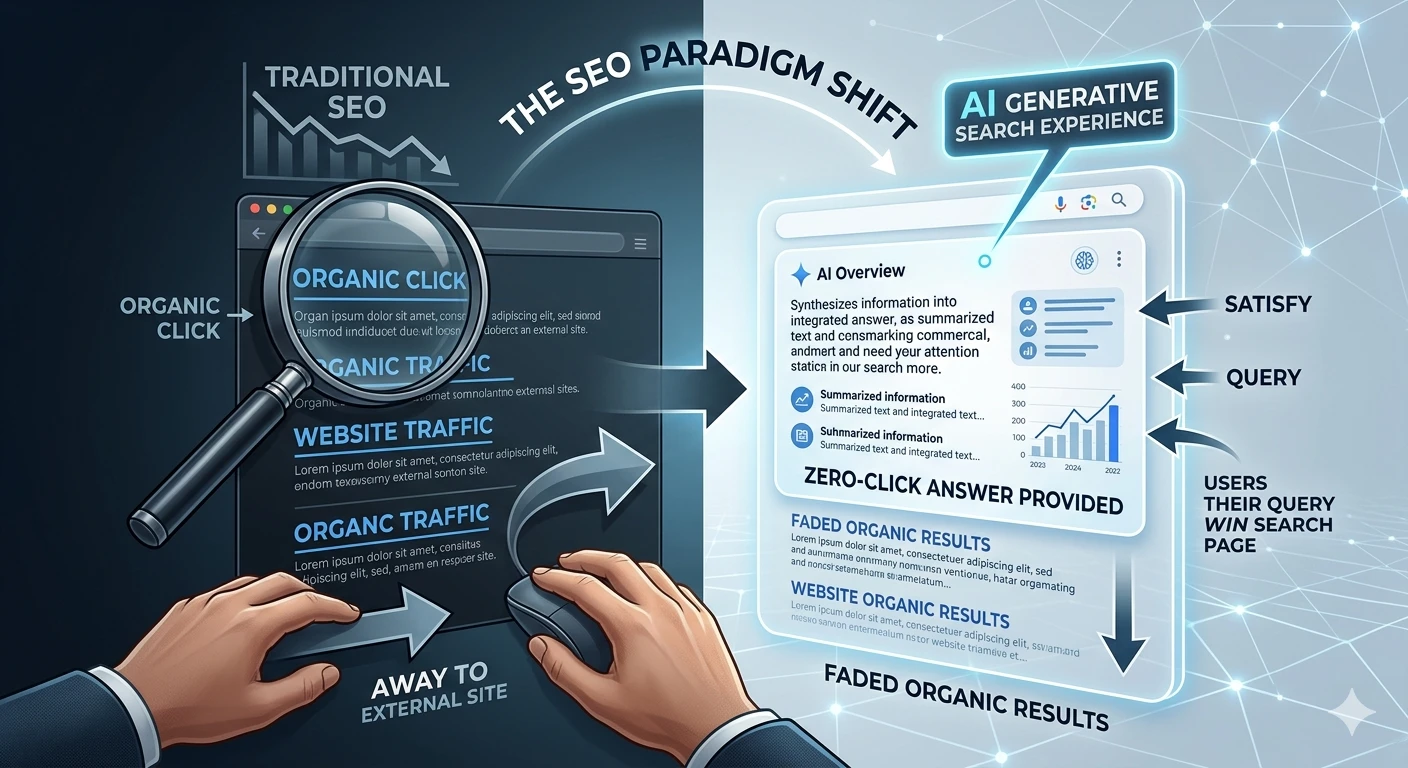
The digital search landscape is undergoing a profound transformation, moving beyond the traditional emphasis on website clicks and page views. For decades, the ultimate goal of SEO was to secure high keyword rankings to drive organic traffic. However, sophisticated AI-powered search capabilities are fundamentally reshaping how users interact with search engine results pages (SERPs).
The Zero-Click Phenomenon Zero-click SEO refers to the phenomenon where users find the answers to their queries directly on the search engine results page without needing to navigate to a third-party website. The growth of this trend is staggering:
- In 2024, 65% of Google searches globally concluded without a single click.
- This figure is projected to exceed 70% by 2025.
- On mobile devices, the trend is even more pronounced, with over 75% of Google searches resulting in zero-click outcomes in 2024.
The Impact of AI Overviews Google’s Search Generative Experience (SGE), now known as AI Overviews, is a major driver of this shift. Launched in May 2023, these AI-powered modules synthesise information from multiple sources to create a complete answer right at the top of the SERP. Because these snapshots are substantial in height (averaging around 1764 pixels), they can push organic listings down by more than 140%.
This visibility shift can lead to a 20% to 60% reduction in organic traffic for some sites, particularly affiliate publishers targeting “best” or “top” terms. However, beyond Google, a broader ecosystem of AI answer engines like ChatGPT, Perplexity AI, and Microsoft Copilot is rapidly emerging. These engines deliver complete answers instantly, often without requiring extra clicks, presenting new opportunities for brands to be found if they adapt their strategies.
Blog 2: Winning the SERP: How to Optimize for AI and Zero-Click Visibility
Introduction Adapting to the zero-click environment requires a strategic shift in optimization efforts. Success is no longer just about driving clicks; it is about ensuring your content is structured and presented in a way that AI models can easily understand and synthesize.
Foundations of AI-Friendly Content
To thrive in this new era, your content must be built on a strong foundation:
- Demonstrate E-E-A-T: Google’s quality guidelines emphasize Experience, Expertise, Authoritativeness, and Trustworthiness. AI models favor content backed by first-hand knowledge, clear subject matter expertise, and reliable sources.
- Optimize Readability: AI search engines scan pages like speed readers to quickly understand content. Use clear headings (H1, H2, H3) to outline hierarchy, keep paragraphs concise (1-3 sentences), and use bulleted or numbered lists to make information digestible for AI systems.
- Leverage Structured Data: Implementing schema markup explicitly tells search engines what your content means, enhancing accuracy and making information easily retrievable by AI. Specific types like FAQ, HowTo, and Article schema help Google categorize content.
Targeting Specific SERP Features Because zero-click searches dominate, optimizing for specific SERP features is paramount for brand visibility:
People Also Ask (PAA): You can target these interactive sections by providing clear, concise answers to related questions within your content.
Featured Snippets: These result boxes appear at the very top of Google’s search results and can capture approximately 8% of all clicks.
Knowledge Panels: Appearing in these panels boosts online visibility and credibility, which you can optimize for by ensuring accurate business information and implementing organization schema.